
How Plastic Export Pallets Help Prevent Food Contamination
Every food shipment rides on a pallet long before it reaches a shelf. That base touches warehouse floors, forklift tines, container walls, and loading docks, so plastic export pallets deserve a closer look from anyone moving food across borders. Contamination can start with what the cargo sits on, not just with the cargo. Here is where pallet risks come from, how plastic compares with wood, and what still falls to the shipper to check.
Table Of Contents:Where Pallet Contamination Starts
A pallet spends the whole trip at the bottom of the load. On an export route it may change hands several times between the packing line, the port, and the receiving warehouse. Moisture, chemical contact, and insects can reach packaging from that position first. Wooden pallets are susceptible to pests, prone to wear and tear, and need replacing more often.
Food hygiene frameworks such as the Codex General Principles cover handling, storage, and transport. A pallet belongs in that thinking too.
Why Plastic Export Pallets Suit Hygiene-Sensitive Cargo
Material and Surface
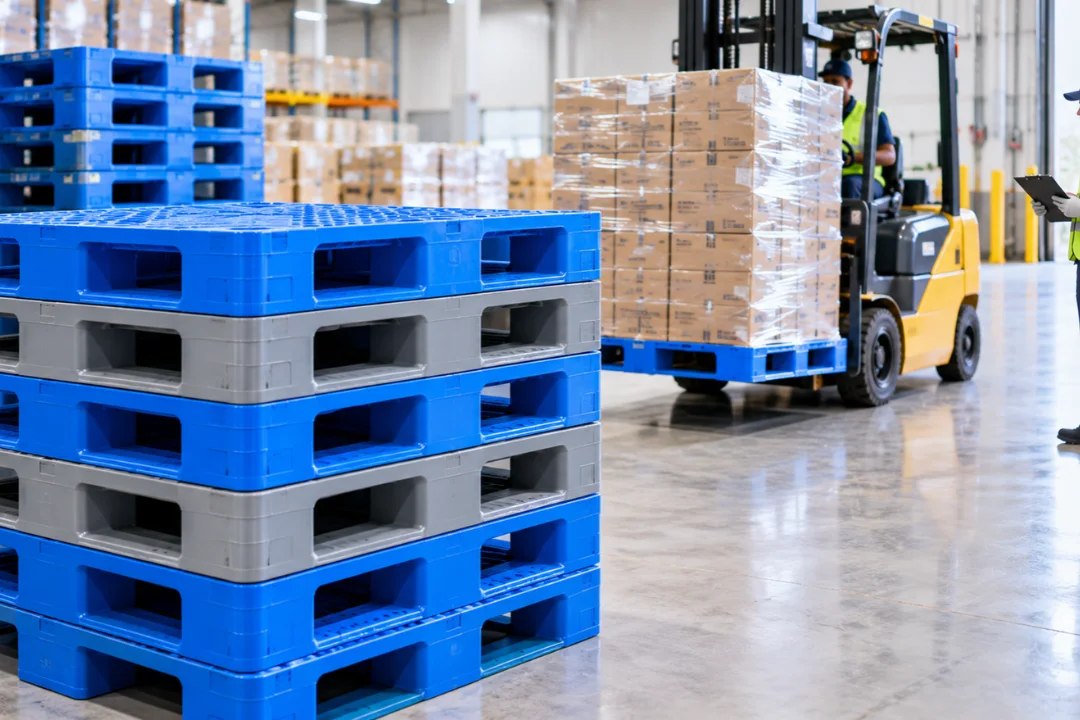
Plastic pallets are molded from high-density polyethylene (HDPE) or polypropylene (PP). Pallets in these materials resist moisture, chemicals, and pests, and chemical resistance is listed as a fit for sensitive settings such as laboratories and food production. They are also recyclable and reusable, which is relevant for pallets that return to the same route.
Colors can signal specific uses, so some warehouses assign one color per zone to keep pallets apart. Whether that suits your site is a question for your food safety plan.
If you source from plastic manufacturers in UAE, ask which of the two materials a given pallet uses and request dimensions and load ratings in writing.
Wood and Plastic Side by Side
Plastic export pallets are lighter than wood, resist breakage, and last longer. Plastic is recyclable, while wood offers limited recycling. The trade-off is cost. The upfront price of plastic may be higher, though durability and reuse can lower the cost over time.
Reading Load Ratings and Container Fit
Load Ratings
Many of the listed pallets measure 1200 × 1000 mm, with heights between 140 and 160 mm. Flat pallet dimensions and tolerances for intercontinental handling are set out in ISO 6780. Ratings differ by model. One 3-runner flat pallet lists 5000 kg static, 2000 kg dynamic, and 1250 kg racking. A standard 3-runner model lists 4000 kg static and 1000 kg dynamic, with racking not applicable.
Two 6-runner models both list 6000 kg static, yet their racking figures are 1250 kg and 750 kg. “Static” means resting on a flat floor, “dynamic” means moving on a forklift or jack, and “racking” means sitting on rack beams. If loaded food cartons will go into racking, read that line first.
Space, Stacking, and Containers
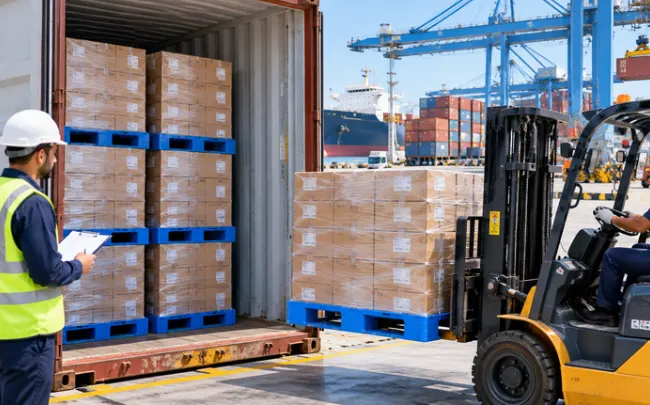
Most plastic pallets stack, and nestable designs save storage and transport space. A standard 40-foot reefer container fits roughly 20 to 24 plastic pallets, depending on dimensions and load. Some designs work with automation systems, and UV-resistant types suit outdoor storage in the UAE climate.
What a Pallet Cannot Do Alone
A pallet is one control point in a longer chain. Clean plastic cannot offset a dirty container, a broken cold chain, or careless handling. Chemicals stored near food also need separate containment, and spill pallets are listed for safe storage of hazardous chemicals.
Import rules for food differ by destination market, so confirm them with the relevant authority before you ship. Document your cleaning routine for reusable pallets, and have a qualified food safety professional review pallet selection. This article offers general information, not regulatory or safety advice.
Final Thoughts
A pallet will not decide a food safety audit by itself, but it is a choice you control early. Resistance to moisture, pests, and chemicals, honest load ratings and a cleaning routine you can document are fair things to ask any supplier about. Multibox Plastic lists dimensions and load ratings for its pallet range, which gives buyers numbers to compare.
Looking at your own route from packing line to port, which stop worries you most?
FAQ
Mostly, yes, with a catch. Plastic shrugs off moisture and pests, which helps, but a dirty pallet is still a dirty pallet. How you clean and inspect it matters as much as the material. Before you ship, check the rules in your destination market and run your setup past a food safety professional.
Wood gives pests a way in and wears out faster, so you end up replacing it often. Plastic resists breakage and tends to last longer. It can cost more up front. Over repeated trips, reuse can bring that cost back down, though your own numbers may land differently.
A standard 40-foot reefer holds roughly 20 to 24, depending on pallet dimensions and load. Measure your own pallets and cargo before you plan a booking.
Yes, if they are UV-resistant. Supplier information lists UV-resistant pallets as suitable for outdoor storage in the UAE climate, so confirm that rating on the exact pallet you buy.