
PP Strap Roll Manufacturers: Who Relies on Them in the UAE
A pallet of cartons leaves the loading bay held together by one thin plastic band, and PP strap roll manufacturers supply that band by the roll. Similar rolls show up in warehouses, factory yards, and building sites across the UAE. This guide covers which sectors use strapping, what the published specifications say, and what a buyer should check before ordering. Every product detail comes from one Sharjah manufacturer’s public pages, so treat it as a worked example rather than a market survey.
Table Of Contents:What Does a Polyester Strap Do on a Loaded Pallet?
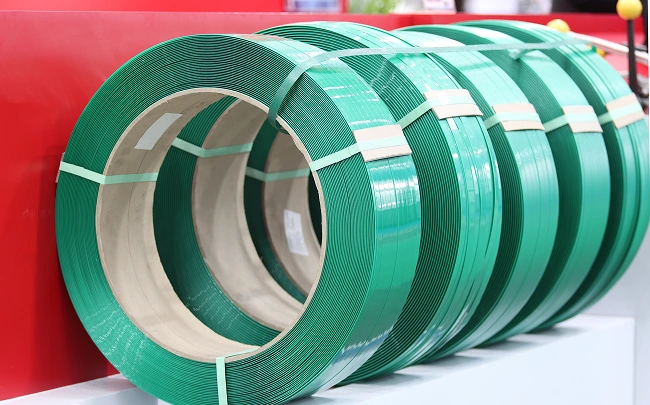
A polyester strap is a flat plastic band used to bundle goods or hold a load in place. The product page reviewed for this article lists packaging, shipping, and storage as general uses. It names three specific jobs: bundling packages, securing pallets, and reinforcing heavy loads during transportation.
The naming needs careful reading. The same listing switches between polyester strap, PPstrap, and PET strapping. Buyers should confirm the exact material on a spec sheet, since the label alone does not settle it.
Plastic manufacturers in UAE can run wide catalogues, and this one is a fair example. Multibox, based in the Sajaah Industrial Area of Sharjah, also lists crates, pallets, spill pallets, waste bins and pallet boxes, and file strapping under general handling products.
Which Sectors Buy From PP Strap Roll Manufacturers
A roll of strapping does not care what sits underneath it. That neutrality is how one supplier ends up serving very different customers on the same day.
Logistics and Warehousing
The strap page lists logistics among its applications, alongside bundling packages, securing pallets, and reinforcing heavy loads in transit. The sector has a federal coordinating body, the UAE Logistics Integration Council. For loading procedures, an international non-mandatory code of practice covers packing and securing cargo transport units. The strap page also points readers to a 300 kg platform trolley for bulky packaged goods.
Manufacturing and Construction
Both sectors appear by name on the same list. A factory bundling parts for dispatch and a site reinforcing a heavy load have different needs, though, and the page does not break them down. Questions about load type belong with the supplier, not with a product listing.
The Wider Plastics Range
The manufacturer’s homepage names retail, food processing, pharma, agriculture, automotive, cold chain, and manufacturing as sectors it supplies. It states 13 years in business, more than 500 products, and customers in over 15 countries. Those figures describe the whole range, which is mostly crates and pallets. The strap page never says strapping goes to each of those sectors.
Specifications That Change How a Strap Behaves
The listing gives a compact set of numbers. Widths run from 12 mm to 32 mm and thickness from 0.6 mm to 1.27 mm. The surface is embossed or plain, a choice the page frames as appearance or functional requirement. Six colours are shown: black, blue, green, grey, red, and yellow.
Width and thickness describe the band, and a narrow, thin one will not suit the same load as a wide, thick one. The page publishes no tensile strength, so that figure has to come from the supplier before anyone matches a strap to a load. Bulk orders and custom sizing go through an enquiry, according to the listing.
Checking a Supplier Before You Order
Start with the material. Ask whether the roll is polyester, polypropylene, or something else, and get the answer in writing.
Then ask for strength data. Tensile strength and the suggested tensioning method for your chosen width and thickness are the two items worth requesting.
Certificates come next. The manufacturer states ISO 9001:2015 certification for quality management from WRG Certifications, described on its site as covering plastic trading. ISO 9001 sets requirements for a quality management system, so it speaks to how a company runs its processes, not to the rating of one strap.
When you compare PP strap roll manufacturers, request the same documents from each so the answers line up side by side.
Strapping a load that will move is a safety matter. Settle the strap, the tensioning method, and the load with the supplier and current guidance, and do not rely on a product page alone.
Final Thoughts
Strapping looks simple until a load shifts. The sectors named on the page share a small set of specifications, and the published ones cover width, thickness, finish, and colour but leave strength open. So before your next order, do you know the material and tensile strength your load actually needs?
FAQ
Mostly for bundling goods and holding loads in place. The product page lists bundling packages, securing pallets, and reinforcing heavy loads during transportation, and it names logistics, manufacturing, and construction as the sectors.
The listing uses both names, plus PET strapping, for a single product, so the page alone does not settle it. Ask the supplier which material is on the roll and get the spec sheet in writing.
Listed widths run from 12 mm to 32 mm, with thickness from 0.6 mm to 1.27 mm. Finishes are embossed or plain, and six colours appear. Custom sizing and bulk orders go through an inquiry.
Not directly. The manufacturer states ISO 9001:2015 certification, which covers quality management systems. Strength figures such as tensile strength belong on a product spec sheet, so request one before matching a strap to a load.