
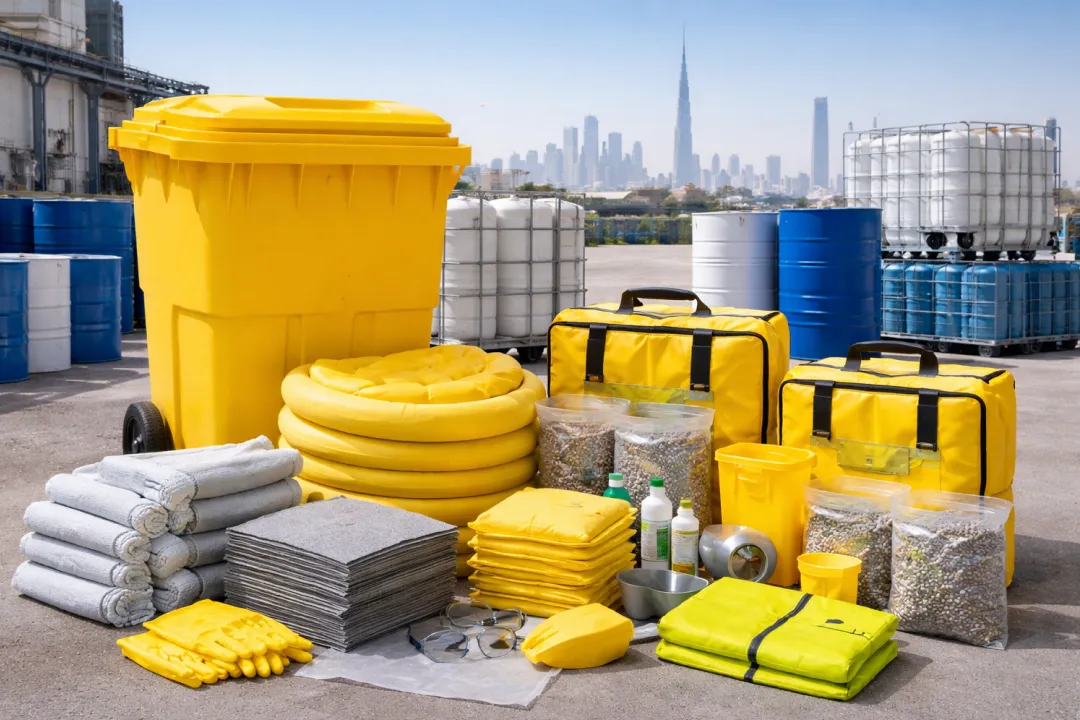
Safe Drum Storage: Your Chemical Supplier in Dubai Guide
The short answer? A standard UAE-certified spill pallet is typically designed to hold either two or four 205-liter drums, depending on the model’s sump capacity. If you’re working with a chemical supplier in Dubai, you already know that safety isn’t just a suggestion; it’s a strict regulatory requirement. Storing 205-liter drums requires a containment system that can handle a leak of at least 110% of the largest drum’s volume.
Table Of Contents:
Why Sump Capacity Dictates Your Drum Count
In the world of industrial storage, it isn’t about how many drums physically fit on the plastic surface. It’s about the “sump” the basin underneath the grate. For a single 205-liter drum, your pallet needs a sump capacity of at least 225 liters to stay compliant with local environmental laws.
If you try to squeeze more drums onto a pallet than it can handle, you’re essentially inviting a massive fine from the municipality. A 4-drum spill pallet is the industrial workhorse in the UAE because its basin is specifically engineered to catch a catastrophic failure of one drum while still having room for drips from the others.
Weight Limits: The Silent Safety Factor
Weight is just as important as volume. A full 205-liter drum can weigh well over 200 kg depending on the density of the liquid. If you’re dealing with a chemical supplier in Dubai for heavy solvents or lubricants, four drums can easily top 800kg.
Our spill pallets at Multibox are manufactured from heavy-duty, UV-stabilized HDPE. This material is chosen because it won’t become brittle in the 50°C heat of a Dubai summer. High-density polyethylene provides the chemical resistance needed for acids, caustics, and oils, ensuring the pallet itself doesn’t melt or react when a leak occurs.
Why Your Chemical Supplier in Dubai Insists On Spill Kits
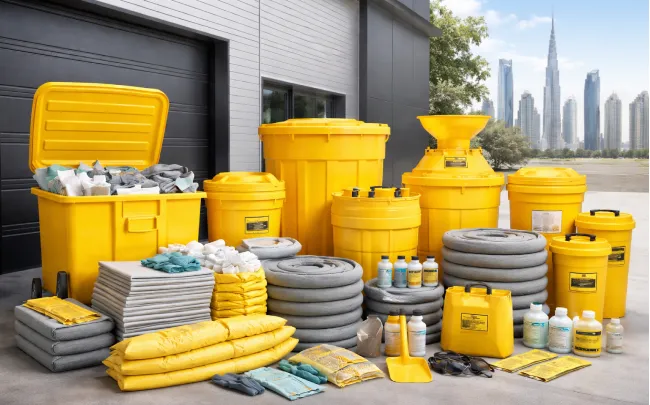
Containment is only half the battle. While a spill pallet catches the pool, a spill kit handles the spray and the mess. Even the best pallet can’t stop a pressurized leak from a punctured drum. This is why having an emergency response plan is a must.
A proper kit should be kept within a few meters of your drum storage. It should contain absorbent socks to “dike” or surround the leak and pads to soak up the liquid. If you’re storing 205-liter drums, your kit needs to be sized correctly. A small “caddy” kit won’t cut it for a 200-liter spill.
Managing Industrial Waste and Liquid Hazards
The UAE has made massive strides in environmental protection. Using the right secondary containment isn’t just about safety; it’s about corporate responsibility. When you use a certified 4-drum spill pallet, you’re preventing hazardous liquids from reaching the groundwater or the drainage system.
If you are using a double IBC spill pallet, the load capacity jumps to 3,000 kg with a 1,150L sump. This is for the “big players” who handle bulk liquid transport. For standard 205-liter drums, stick to the 2-drum or 4-drum configurations to keep your warehouse organized and easy to navigate.
Best Practices for Drum Storage in a UAE Warehouse
- Check the Sump: Inspect the basin weekly. Rainwater or dust can fill it up, reducing the available space for an actual spill.
- Compatibility: Don't store incompatible chemicals on the same pallet. If an acid and a base leak into the same sump, you’ve got a bigger problem than just a mess.
- Training: Make sure your team knows how to use the drain plug on the pallet to safely recover leaked chemicals.
Final Thoughts
Safety in the warehouse shouldn’t be a guessing game. By sticking to the rated capacity of your spill pallets and keeping your response kits ready, you protect your team and the environment. Does your current storage setup meet the 110% rule?
FAQ
The short answer? No. Pallets are rated for specific weights and volumes. Squeezing extra containers on there, even if they are smaller, can unbalance the pallet and make it impossible for the sump to do its job.
Usually, no, as long as the pallet is made of HDPE (High-Density Polyethylene). It’s incredibly resistant to most corrosive chemicals. Just always double-check the chemical compatibility chart provided by your supplier.
Most pallets have a drain plug. You can use a pump or the gravity drain to move the leaked liquid into a waste drum for proper disposal. Don’t just pour it down the sink!
Standard plastic might warp, but our HDPE pallets are UV-stabilized. They’re built to live in a warehouse in Jebel Ali without turning into a puddle of melted plastic.
Check it every six months. The absorbents don’t really “expire,” but the plastic bags can degrade, or items might go missing. A kit is useless if the pads are gone when you actually need them.