

How Jumbo Crates Can Streamline Your Warehouse Operations
Warehouse management in the UAE is a different beast. Between the heat and the high-speed logistics demands, your storage gear needs to be more than just a box. If you’re still wrestling with flimsy bins or oversized pallets that don’t quite fit your rack, you’re bleeding efficiency. The fix? Moving to jumbo crates. These aren’t just larger versions of standard tubs; they’re engineered to handle the heavy lifting that smaller containers can’t touch.
At Multibox, we provide specialized storage that keeps operations moving. Here is how upgrading your crates can change your floor game.
Table Of Contents:
| No | Contents |
|---|---|
| 1 | Why Are Jumbo Crates Better for Bulk Handling? |
| 2 | Stacking and Space: The Vertical Win |
| 3 | Closed vs. Perforated: Which One Fits? |
| 4 | Durability that Actually Lasts |
| 5 | Final Thoughts |
| 6 | FAQ |
Why Are Jumbo Crates Better for Bulk Handling?
Standard crates are fine for small parts, but they fail when you’re dealing with high-volume stock or oversized industrial components. Jumbo crates provide massive capacities—often upwards of 130 to 180 litres—meaning your team spends less time moving multiple small bins and more time fulfilling orders.
Think of it this way: one trip with a jumbo-sized unit replaces four trips with standard ones. When you multiply that across a 10-hour shift in a Dubai distribution centre, the time savings are massive.
Stacking and Space: The Vertical Win
In most warehouses, floor space is the most expensive asset you own. If you’re not stacking, you’re wasting money. High-quality industrial plastic containers are designed with reinforced bases that allow for secure, vertical stacking.
Because they use standard footprints, they align perfectly on pallets and racking systems. This stability is critical. A leaning stack is a safety hazard and a recipe for damaged goods. With a locked-in, stackable design, you can utilize your vertical clearance without the fear of a warehouse “avalanche.”
If you want to dive deeper into how plastic crates stack up against wooden alternatives in terms of strength, cost, and usability, check out our detailed guide on plastic storage crates vs. wooden crates
- Open-top drums: Best for powders or high-viscosity liquids that need scooping.
- Tight-head drums: The gold standard for bulk liquid transportation of low-viscosity chemicals, featuring secure seals to prevent evaporation and spills.
Closed vs. Perforated: Which One Fits?
- Choosing the right build is vital for your specific industry.
- Totally Closed Crates: These are the go-to for logistics and manufacturing. They keep dust, moisture, and debris away from sensitive parts or packaged goods.
- Perforated Crates: Essential for the UAE’s food and fishery sectors. These allow for maximum airflow, which is the only way to prevent heat buildup and spoilage in fresh produce.
For more on how standard crate options compare and when to use them effectively, see our guide on regular crates in UAE
as reliable storage and handling solutions.
Durability that Actually Lasts
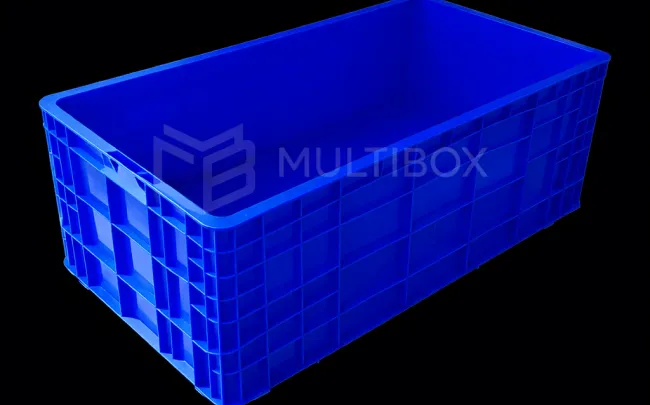
Cheap plastic cracks under the UAE sun or within the rigors of a busy loading dock. Our crates are built from HDPE (High-Density Polyethylene) or PP (Polypropylene). These materials are tough enough to resist impacts from forklifts and handle temperature shifts without becoming brittle.
Investing in heavy-duty storage solutions means you aren’t replacing your inventory every six months. It’s a “buy once, cry once” scenario that pays off in long-term operational savings.
- To understand the broader landscape of plastic crates and find top manufacturers offering a range of storage solutions — including those ideal for warehouse needs — check out our guide on top plastic crates manufacturers in UAE
Final Thoughts
Streamlining your warehouse isn’t about working harder; it’s about choosing tools that do the heavy lifting for you. Have you looked at your current breakage rates or the time lost in manual handling lately? It might be time to scale up.
FAQ
Generally, these are high-capacity containers starting around 130 litres. They are built specifically for bulky industrial items that would break or overflow a standard 40-litre bin.
Absolutely. Most are designed to be pallet-compatible. Their reinforced bottoms can handle the weight even when they’re fully loaded and stacked on a pallet moved by a reach truck.
Yes, if they are made from food-grade HDPE. These are non-porous and easy to sanitize, making them perfect for meat processing or fruit distribution in the UAE.
They do. Colour-coding is actually a pro tip for warehouse organization. Use blue for raw materials and red for finished goods, for example. It cuts down on errors instantly.