
Drum Pallets Plastic vs Steel Stands: Which Is Safer?
A single 220-litre drum filled with industrial liquid can weigh well over 240 kilograms once the container itself is factored in. That load rests directly on whatever platform holds it, and the debate over drum pallets plastic versus steel stands usually starts the moment someone notices a crack, a rust patch, or a drum that has shifted out of position on the warehouse floor.
Table Of Contents:
Plastic Drums 220 L: What Actually Sits Beneath Them?
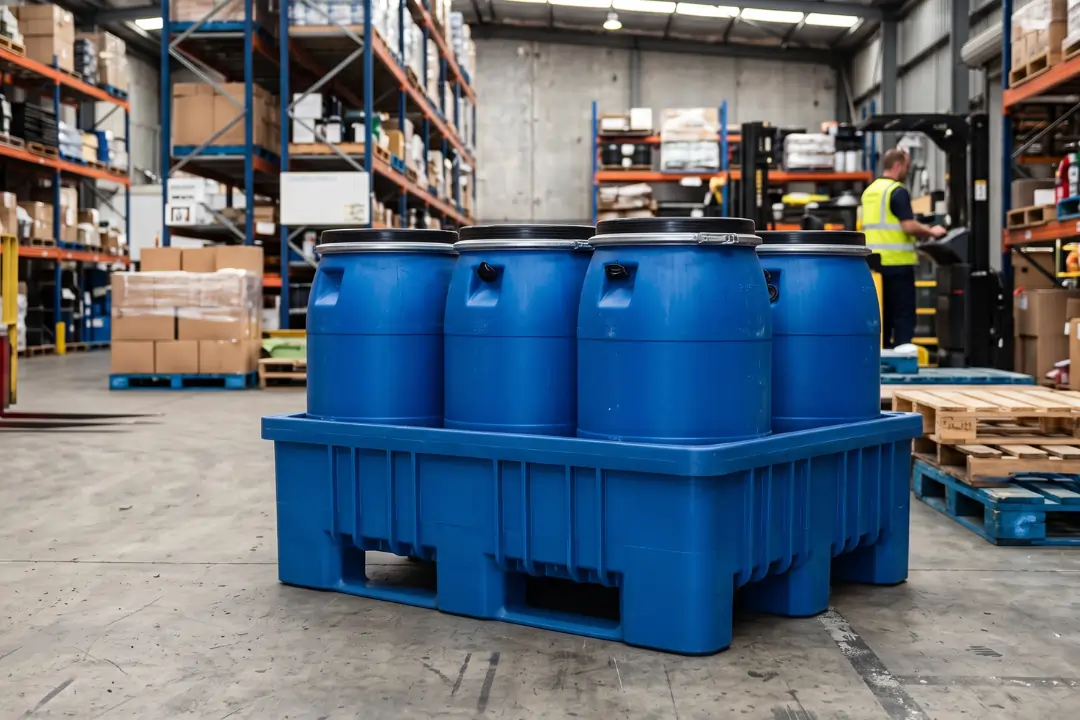
Before comparing bases, it helps to understand what they are holding. Plastic drums 220 L, built from polycarbonate or polypropylene, measure roughly 570 mm wide and 960 mm tall and come in open-top or tight-head designs depending on whether the contents are solid, paste-like, or liquid. Open-top drums use a metal locking band around the lid, which keeps solids and powders secure, though it also means the platform underneath has to tolerate repeated lifting and resealing without cracking over time. Tight-head versions, sealed except for small bung holes for pouring, put steady pressure on one section of the base rather than spreading weight evenly the way an open-lid design does.
The material matters as much as the platform. PC and PP resist most industrial chemicals reasonably well, but neither is indestructible on its own, and what the drum sits on often determines how long the whole storage setup actually lasts.
Where Do Steel Drum Stand Still and Earn Their Keep?
Steel stands have been the default in older facilities for decades, and there is a reason for that. A welded steel frame holds a fixed, heavy load indefinitely without the slow given that some lower-grade plastics show under constant weight. For a single drum stored permanently in one spot, away from moisture and corrosive spillage, a steel stand does the job without much fuss or extra cost.
The trouble starts when that same stand sits in a humid coastal warehouse, takes a splash from an acidic cleaning agent, or picks up condensation from a poorly ventilated storage room. Rust rarely announces itself early. It works quietly at welds and base joints until a stand that looked sound a year ago gives way under completely normal handling.
Drum Pallets Plastic Platforms: What the Load Ratings Actually Show?
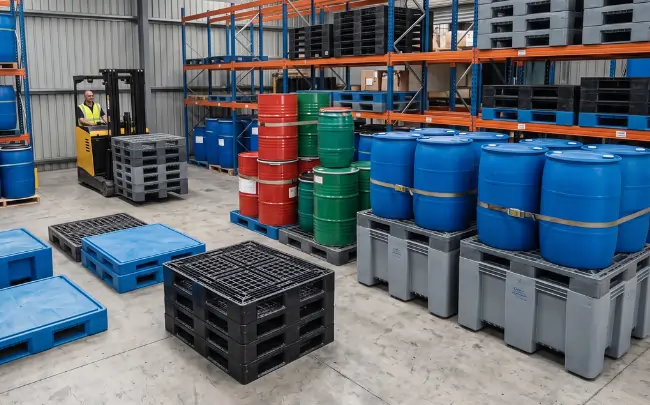
Generic load claims are easy to print and hard to verify. Multibox’s runner pallets list separate static, dynamic, and racking figures instead of one blanket number. A 6-runner pallet rated for a 6,000 kg static load carries a noticeably different dynamic rating once forklifts and movement enter the picture, often closer to 1,500 kg. That gap matters more than most buyers assume, because a platform tested only at rest can behave very differently once it is being wheeled across a floor with a full drum riding on top of it.
Steel stands rarely publish this level of detail. Many are rated on weld quality and gauge thickness alone, with no separate dynamic or racking figures specific to drum handling, which makes an honest side-by-side comparison harder than it should be for anyone doing due diligence before a purchase.
Chemical Exposure Narrows the Question Considerably
Facilities storing acids, solvents, or reactive cleaning agents face a real risk of corrosion on any exposed steel component, including welds and mounting bolts that are not always visible during a routine walkthrough. OSHA’s standard on flammable and combustible liquid storage, 29 CFR 1910.106, sets out storage and handling expectations that plenty of facilities in the Gulf region reference informally as a benchmark, even where local codes differ in the specifics. Under those conditions, a plastic base that resists chemical attack removes one variable from an already complicated safety picture, and one less variable is usually worth something during an audit.
Moisture alone raises the same concern without any chemical spill involved. Gulf coastal humidity is enough on its own to accelerate corrosion on unprotected steel across a few storage seasons, long before any acid or solvent gets near it.
Sourcing from Plastic Manufacturers in UAE Changes Lead Times
For facilities working on tight replacement schedules, sourcing from plastic manufacturers in UAE rather than importing steel stands from overseas often shortens turnaround by weeks. Local production means a damaged or worn platform can be replaced within days instead of waiting on a shipping schedule, and that gap matters when a failed base leaves a drum sitting unsupported until the replacement shows up.
Final Thoughts
Neither material wins in every scenario. A dry, low-chemical storage room with drums pallets plastic that rarely moves is still a reasonable place for a steel stand. A facility handling corrosive liquids, coastal humidity, or drums that get reloaded and shifted often will usually get steadier performance from a plastic base built for that exact load pattern. The question worth asking before the next purchase order goes out is simple: what does your drum-storage area actually get exposed to on an average week?
FAQ
Most are within their rated load. Manufacturers publish static and dynamic figures separately, so check both before assuming a pallet rated for 6,000 kg at rest will hold up the same way once a forklift is moving it around a warehouse floor.
Yes, eventually, even with a protective coating. Gulf coastal humidity alone speeds up corrosion at welds and joints over a few years, and any acid or cleaning agent splash accelerates the process further. Regular inspection catches it before it becomes a real hazard.
It depends entirely on the design. A 3-runner pallet might handle a 4,000 to 5,000 kg static load, while a 6-runner version can go higher. Always check the dynamic and racking figures too, not just the static number printed on the spec sheet.
You can, and many facilities do without issue. The stand just needs to be rated for the drum’s full weight once filled and kept away from moisture or corrosive exposure that would weaken the welds over time.
Steel usually costs less upfront. Plastic tends to even things out over time in humid or chemically active environments, since it avoids the replacement cycle that rust and corrosion eventually force on an unprotected steel stand.