

Mastering RFID Asset Tracking for Plastic Crates in the UAE
Asset management in the UAE’s high-heat, high-speed logistics sector doesn’t have room for error. If you’re still relying on manual tallies or line-of-sight barcodes for thousands of plastic crates, you’re losing money every time a truck leaves the dock. The fix? A robust system for RFID asset tracking.
Moving to RFID isn’t just about slapping a sticker on a crate and hoping for the best. It’s about creating a digital shadow of your physical inventory. When done right, you get 100% visibility without your team lifting a finger. Here is the real-world blueprint for attaching tags to plastic crates and making them “smart.”
Table Of Contents:
How Do You Attach RFID Tags to Plastic Crates Effectively?
The most reliable way to attach an RFID tag to a plastic crate is using high-bond industrial adhesives or mechanical fasteners in a recessed area. Because crates are often stacked, dragged, and washed, the tag needs to be protected from physical impact. Placing the tag in a molded-in “pocket” or a protected rib on the crate’s side ensures it won’t get scraped off during transit. In the UAE, you also have to fight the heat. Standard glues will fail when temperatures hit 45°C in a shipping yard. You need tags with an acrylic-based adhesive specifically rated for high-temperature cycles and UV exposure. If your crates undergo industrial washing, ensure the tags are IP68-rated, meaning they are completely dust-tight and waterproof.Choosing the Right Tags for Plastic Surfaces
Not all tags play nice with plastic. While plastic is generally “RFID-friendly” (unlike metal or liquid), the density of the crate and its contents still matter. For most logistics loops, passive UHF tags are the industry standard. They’re cost-effective and provide a read range of several meters, which is perfect for gate readers.
If you’re tracking high-value goods inside those crates, you might consider “flag tags.” These stand slightly off the surface to maximize the read angle. However, for standard stackable crates, a low-profile, ruggedized “on-plastic” label is usually the winner. It stays flush, survives the palletizer, and keeps your RFID asset tracking data flowing.
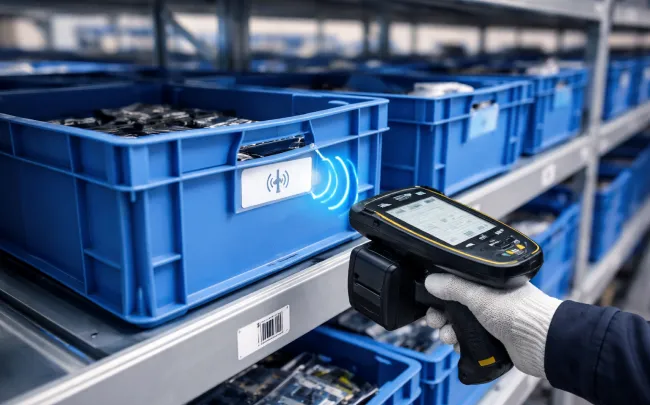
Where Is the Best Placement for Maximum Readability?
Placement is everything. If you hide the tag in the middle of a stack, the reader might miss it. The “sweet spot” is usually on the upper corner of the crate’s shorter side. This ensures that when crates are stacked on a pallet, the tags are facing outward and are easily caught by portal readers at warehouse bay doors.
Avoid placing tags too close to each other. If tags are touching, you get “signal collision,” which kills your accuracy. Keep at least 5cm of space between tags when crates are nested. Testing is key here. Before you tag 5,000 crates, run a pilot with ten and see how they perform at different angles through your dock doors.
Integrating RFID Asset Tracking with Your UAE Supply Chain
Once the tags are on, the real magic happens in the software. In the UAE, logistics hubs like Jebel Ali or Dubai South move fast. Your RFID readers should feed directly into your warehouse management system (WMS). This turns a simple “plastic box” into a data point that tells you exactly when it arrived, where it’s stored, and when it’s due for return.
At Multibox, we’ve seen that companies moving from manual checks to automated RFID asset tracking cut their inventory labor by up to 80%. It’s not just about knowing where the crate is; it’s about knowing your inventory is accurate without ever having to stop the line.
FAQ
The short answer? No. Not if you want them to last more than a week. Logistics is rough. Between the forklifts, the humidity, and the cleaning chemicals, you need “hard tags” or ruggedized labels. Paper stickers are for office files, not industrial crates.
Not if you buy the right ones. Look for tags rated for at least 85°C. High-quality tags are designed to survive the UAE summer and even industrial steam cleaning. Cheap tags will “de-tune” and stop working when they get hot.
Definitely not. Focus on “choke points” loading docks, main exits, and wash stations. Catch the crates as they move from one zone to another. That’s how you get the best ROI without overspending on hardware.
Yes, as long as the destination has compatible readers. Most industrial RFID uses global standards (like GS1), so a crate tagged in Abu Dhabi can still be read at a port in Europe or the US.